Your WordPress site, in good hands.
Tell us what needs improving. We can help with speed, maintenance, fixes, and new websites.

Your WordPress site, in good hands.
Your WordPress site, in good hands.
Fluent Support is a self-hosted WordPress help desk that lets you manage support tickets, agents, customer conversations, automations and integrations from inside WordPress. Unlike many SaaS help desks, it does not charge per agent, and your support data remains on your own WordPress installation.
Updated September 2026: Fluent Support has changed substantially since this review was first published. The 2.x generation introduced a redesigned interface, new permissions, improved performance, broader integrations, AI assistance, MCP support and a much more advanced reporting system.
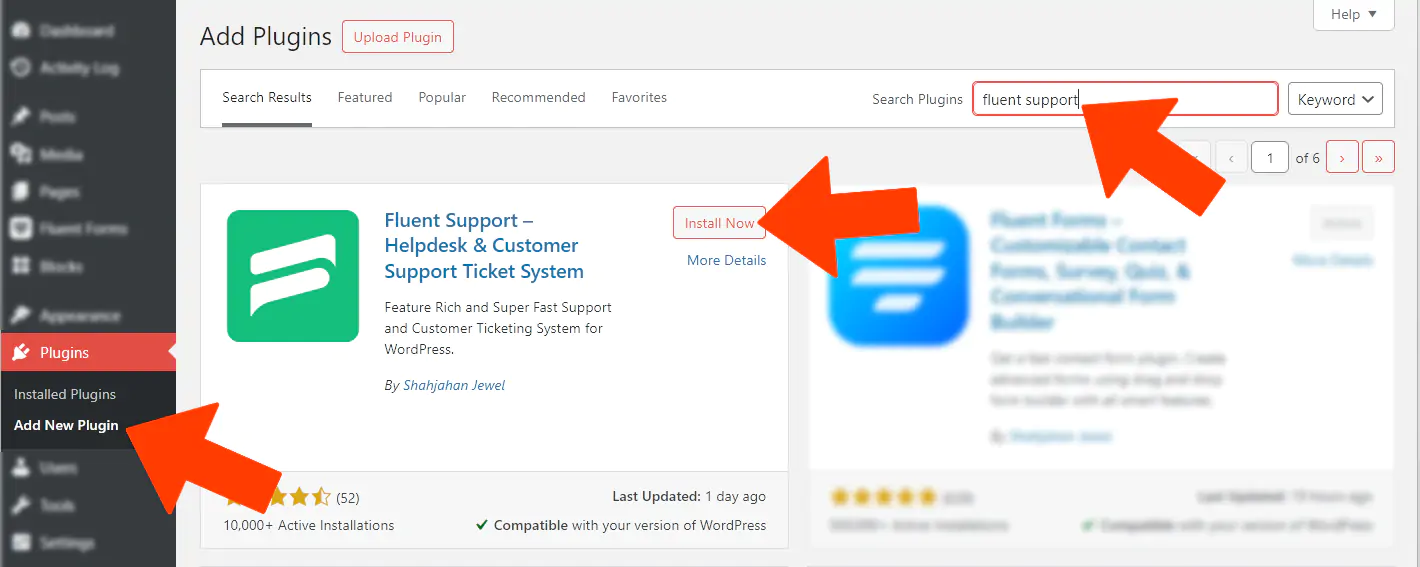
Fluent Support turns a WordPress site into a complete support desk. Customers can open tickets through a portal or email, while agents manage conversations from the WordPress dashboard.
The main difference from services such as Help Scout, Zendesk or Freshdesk is architectural: Fluent Support runs inside WordPress. That means the ticket database lives on infrastructure you control instead of being stored in a separate SaaS platform.
This is especially attractive for WordPress agencies, plugin businesses, WooCommerce stores, membership sites and online-course platforms that already have their customer data inside WordPress.
One correction to our older review is important: the free edition is not simply a tiny trial limited by ticket count. Fluent Support’s current positioning includes unlimited agents, and the product is designed to let teams start with a functional help desk before upgrading for more advanced business features.
The Pro version is where Fluent Support becomes much more suitable for a serious support operation. Depending on the feature, Pro adds capabilities such as advanced reports, AI assistance and auditing, more workflow controls, premium integrations, advanced custom fields, business email piping and expanded administration tools.
For a small site that only needs basic ticket management, starting with the free edition makes sense. For a store, agency or product business where support is part of daily operations, Pro is easier to justify.
A help desk is much easier for customers when they do not have to keep returning to a web portal. Fluent Support can turn incoming support emails into tickets and let customers continue the conversation from their normal email client.
Current Pro plans include business-email piping allowances based on the license tier, while email parsing itself is listed as unlimited. This allows a WordPress-based support desk to behave much more like a conventional hosted ticket system.
Automation is one of the strongest reasons to use a dedicated help desk instead of managing support in a shared mailbox.
Fluent Support workflows can automate repetitive tasks based on ticket conditions. For example, a ticket can be tagged, assigned, prioritized or routed when it matches a product, customer attribute or other rule.
The practical benefit is consistency. A growing support team should not depend on every agent remembering the same manual process for every ticket.
Fluent Support now includes a much broader AI layer than earlier versions. AI can help agents generate responses, summarize conversations and analyze tone. The 2.4 release also adds an AI Ticket Audit report that can evaluate tickets through OpenAI, Gemini or Anthropic.
That does not mean support should be fully automated. We see AI as an agent-assistance tool: useful for summarizing long threads, drafting a starting response and identifying patterns, while a human remains responsible for the final answer and customer relationship.
One of the more unusual additions in 2026 is support for the Model Context Protocol (MCP). With the free FluentHub plugin and WordPress Application Passwords, compatible AI clients can work with support data through defined tools.
That can enable workflows such as searching tickets, reading customer context, posting replies or retrieving team information from an AI environment. Because this grants access to real support data and actions, permissions and credentials should be configured conservatively.
The reporting side is much more capable than it was when we first reviewed the plugin. Fluent Support 2.4 adds dedicated reporting for overall ticket activity, agent performance, products and business inboxes, with date-range filtering and comparison charts.
Historical snapshots are also useful because they let managers compare stored report states with current live data instead of relying on one static dashboard view.
Fluent Support is particularly compelling when customer context already exists inside WordPress. Native integrations include WooCommerce, Easy Digital Downloads, LearnDash, LifterLMS, TutorLMS, BuddyBoss, membership plugins and other tools in the WPManageNinja ecosystem.
That context can reduce the need for agents to jump between separate systems just to understand what a customer purchased, which course they are enrolled in or which product the ticket relates to.
Fluent Support uses annual licensing rather than per-agent pricing. The current regular annual prices published by Fluent Support are:
The official pricing page is currently advertising a first-year discount, so the checkout price may be lower than these regular amounts. Each tier includes unlimited agents, while the number of business email-piping addresses increases with the license level. Always check the official pricing page for the current offer.
Keeping support inside WordPress has clear advantages, but it also means your website infrastructure becomes part of your help desk infrastructure.
For WordPress-centric businesses, those trade-offs can be worthwhile because the help desk sits beside the customer and commerce data the support team already needs.
We removed the old static comparison chart from this review because help-desk plans and feature sets change too frequently for a screenshot to remain reliable.
The more durable comparison is this: Fluent Support favors self-hosting, unlimited agents and WordPress integration. SaaS platforms such as Help Scout, Zendesk or Freshdesk favor an externally managed service with infrastructure and support operations separated from your WordPress installation.
The right choice depends on whether you value owning the data and integrating deeply with WordPress more than you value outsourcing the help-desk platform itself.
Fluent Support is considerably more mature in 2026 than the plugin we originally reviewed. The 2.x redesign, advanced reporting, AI tooling, stronger integrations and MCP support turn it into a serious help-desk platform rather than merely a WordPress ticket plugin.
Its biggest advantage remains its business model and architecture: unlimited agents, support data stored in WordPress, and tight integration with the applications already running on the site.
For teams already centered around WordPress, WooCommerce or the Fluent ecosystem, it is one of the more natural ways to bring customer support into the same stack.
Need help configuring, securing or maintaining a WordPress support stack? Our WordPress Maintenance service can help, and suitable premium licenses may be included from our available subscriptions when applicable.